
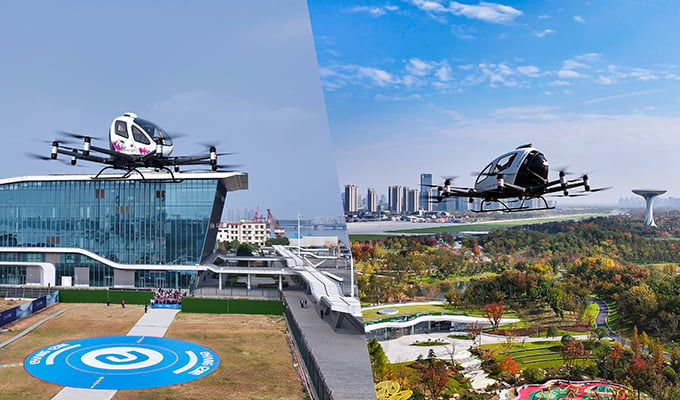
Understanding the complexities of unmanned aerial vehicles—and more specifically, autonomous aerial vehicles (AAVs)—is crucial for anyone interested in advancements in aviation technology. If you are contemplating a career in this field, or simply fascinated by the innovations driving the future of air transportation, it's essential to recognize the rigorous testing and quality assurance processes that underpin the safety and reliability of these aerial systems. One noteworthy example is EHang, a company that has undertaken extensive flight testing and quality certification for its Passenger Autonomous Aerial Vehicles. Their dedication to ensuring safety in a rapidly evolving technological landscape sets a high benchmark for industry standards.
Now it has reached a pivotal milestone by obtaining the first batch of Air Operator Certificates (OC) in China for its pilotless aerial vehicles. This certification from the Civil Aviation Administration of China (CAAC) allows for the commercial operation of human-carrying aerial vehicles, thereby ushering in a new era for the low-altitude economy. Citizens can now explore low-altitude tourism and urban sightseeing through flight tickets offered at select operation sites in cities like Guangzhou and Hefei. The implications of this development are profound, not just for EHang, but for the future of urban transportation and tourism.
EHang has subjected its AAVs to a comprehensive battery of tests that ensures they can withstand various environmental conditions and operational stresses. These include static tests to evaluate structural integrity, load ground tests to gauge performance under weight, and durability assessments that simulate prolonged use. Furthermore, environmental tests such as those conducted under high humidity, extreme temperatures, and adverse weather conditions like typhoons and rainstorms ascertain that these vehicles can operate safely and reliably in real-world scenarios. EHang’s commitment to meeting the AS9100D International Aerospace & Aviation Quality Management System standard demonstrates their serious approach to quality, underscoring the company’s role as a leader in pioneering safe aerial transport solutions.