
NewTech Showfloor
This edition arrives with its deepest tech upgrade yet. Building on the "ASK ME" AI agent introduced at the 139th session (April 2026), the 140th fair is set to roll out 16 digital systems and 22 smart scenarios. The headline feature is booth-level indoor navigation using a BeiDou + Bluetooth AOA + 5G blend, planned to cover the full venue of more than 75,000 booths, with AR live-wayfinding. ASK ME lets a buyer scan a QR code and ask, in natural language, for directions, a product category, or services; its "photo-to-product" mode matches a snapped item to nearby suppliers in seconds.
Scale context for newcomers: the 139th session drew 314,000 overseas buyers from 220 countries and regions, with 32,000+ exhibiting enterprises across about 1.55 million square metres. The 140th also plans 700+ new-product launch events. For a first-time visitor, the practical story is simple — the fair that was famous for getting people lost now ships its own GPS.
The 140th China Import and Export Fair (Canton Fair) runs in three phases from October 15 to November 4, 2026, at the Canton Fair Complex in Pazhou, Guangzhou. Phase 1 (Oct 15–19) covers advanced manufacturing; Phase 2 (Oct 23–27) covers home and gifts; Phase 3 (Oct 31–Nov 4) covers apparel, food, and health. Between phases the halls close for switch-over on Oct 20–22 and Oct 28–30.
- Details
As the dust settles on an incredibly fiercely contested year in the global automotive sector, the final 2025 sales figures for China's top automakers reveal a market divided by hyper-competition, aggressive pricing, and shifting consumer demands.
While tech disruptive newcomers surged past expectations, some legacy giants found their hyper-ambitious targets hit by a harsh reality check.
Here is the ultimate scorecard of Target vs. Actual Performance (in Units):
| Brand | 2025 Target | 2025 Actual Sales | Status / Achievement Rate |
|---|---|---|---|
| BYD | 4.60 Million | 4.602 Million | ✅ 100.0% (Hit Target) |
| Geely | 3.00 Million | 3.024 Million | ✅ 100.8% (Exceeded) |
| Leapmotor | 500,000 | 596,000 | 🚀 119.2% (Top Overachiever) |
| Xpeng | 350,000 | 429,000 | 🚀 122.5% |
| Xiaomi | 350,000 | 412,000 | 🚀 117.7% (Tech to Auto) |
| Changan | 3.00 Million | 2.913 Million | ⚠️ 97.1% (Close Miss) |
| Chery | 3.26 Million | 2.806 Million | ⚠️ 86.1% |
| Li Auto | 700,000 | 406,000 | ❌ 58.0% |
| GWM (Great Wall) | 4.00 Million | 1.323 Million | ❌ 33.1% (Over-ambitious) |
💡 Key Takeaways:
- The Titans Stay Strong: BYD and Geely proved their market dominance by successfully locking in their massive 3M+ and 4M+ milestones, showing robust resilience amid a brutal price war.
- The New Wave Surges: Xiaomi and Xpeng capitalized heavily on intelligent driving and tech ecosystem integration, comfortably smashing their initial 350k goals. Leapmotor emerged as a dark horse in the value-for-money segment.
- The Perils of Over-Optimism: Great Wall Motor (GWM) and Li Auto set targets that proved disconnected from the rapidly shifting domestic macroeconomic environment and EV transition pace, leading to sharp course corrections.
The era of easy growth in China's automotive market is officially over. Surviving and thriving now requires perfect execution, local supply chain dominance, and a rapid global footprint.
- Details
https://www.cantonfair.net/c/102-financial-services
In the age of Artificial Intelligence, many leaders think they have found the "perfect" tool. AI can track every worker, count every penny, and plan every second. It looks like a dream for any manager. However, AI has a huge "blind spot." If you follow it 100%, you might lead your organization into a trap.
Here is why AI is a flawed manager and how a wise leader should fix it.
1. The "Robot" Problem: AI Has No Common Sense
AI is great at math, but it is terrible at understanding "why." It only follows the data it was given.
The Example: The 1983 Nuclear Error In 1983, a Soviet computer system (an early form of AI) reported that the U.S. had launched nuclear missiles. If a "perfect" manager had followed the computer, the world would have ended. But the human officer, Stanislav Petrov, had common sense. He felt something was wrong—the data didn't make sense. He chose to ignore the machine and saved the world.
The Lesson: AI can see the "what," but it cannot feel the "context." It doesn't know when a situation is unique or when the rules should be broken.
2. The "Fragile" Problem: AI Breaks in a Crisis
AI is built on the past. It looks at what happened yesterday to plan for tomorrow. But what if tomorrow is completely different?
The Example: The Shipping Disaster Imagine an AI managing a global shipping company. To be "perfectly efficient," it plans the exact fuel and the exact route for every ship to save money. But then, a massive storm hits or a canal gets blocked. Because the AI left zero extra space (no extra fuel, no extra time), the whole system collapses.
The Flaw: AI builds "glass" systems. They are beautiful and clear, but they have no "cushion." One small mistake causes the whole thing to shatter.
3. The 15% Rule: Why We Need "Waste"
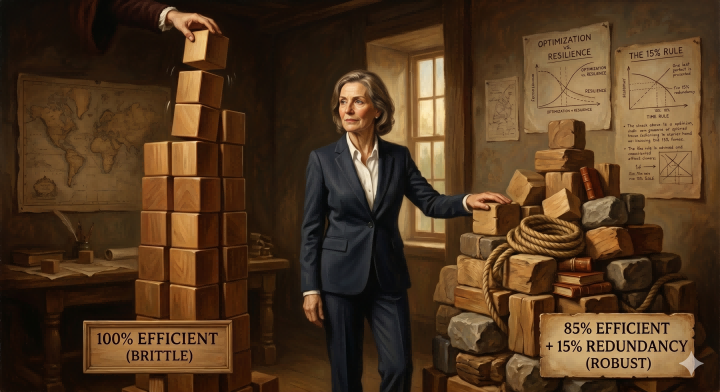
To fix the flaws of AI, a leader must force the system to be intentionally imperfect. I call this the 15% Rule.
A leader should say to the AI: "I don't want 100% efficiency. Give me 85% efficiency, and keep 15% as 'Extra Space'."
-
15% Extra Money/Stock: This is your insurance. When the AI is wrong about the future, this "wasteful" stock saves the company.
-
15% Extra Time: Instead of working 100% of the time, give workers 15% of their day to just think or talk. New ideas never come from a busy robot; they come from a relaxed human.
4. The Goal: Be a Leader, Not an Operator
In the future, a "mediocre" manager will just do what the AI says. They will be efficient but brittle.
A wise leader uses AI to do the boring math, but they spend their own time on the things AI can't do:
-
Empathy: Understanding why an employee is sad or tired.
-
Ethics: Deciding what is "right," not just what is "cheap."
-
Creativity: Dreaming of a future that isn't in the data.
AI is a powerful tool, but it is a cold and fragile boss. It can help you win the "sprint" of daily tasks, but it might make you lose the "marathon" of long-term survival.
Management is not about being a perfect machine. It is about protecting the "messy," "wasteful," and "creative" parts of being human.
- Details
https://www.cantonfair.net/tag/23664-supplychain
When news broke about the 2026 conflict in Iran, most people rushed to the gas station. We’ve been taught that "Middle East trouble = expensive oil."
But in today’s world, the supply chain—the invisible web that moves parts and products across the globe—is much more complicated. This war isn't just a "fuel crisis"; it is a supply chain heart attack. It is changing how things are made, how they are insured, and why your next online order might be months late.
Here is the "anti-common sense" look at how the global supply chain is breaking and rebuilding.
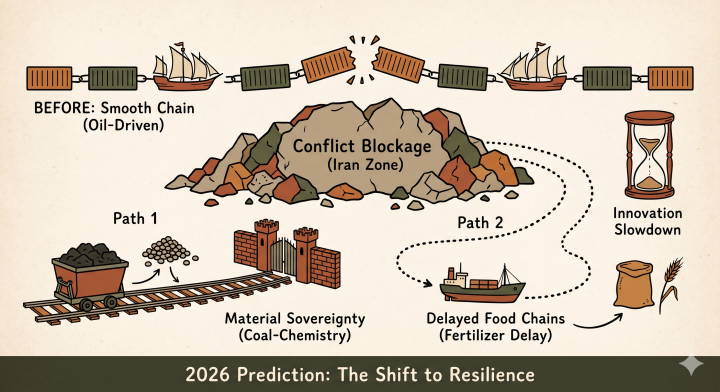
1. The "Paper" Blockade: Why Insurance is the Real Boss
The Common Idea: If the ocean is open, ships will sail. The Supply Chain Reality: In 2026, insurance companies have more power than generals. Even if the Strait of Hormuz is physically open, insurance companies have raised "War Risk" fees by 500% or more. For many shipping companies, it is now too expensive to insure a cargo ship. When the "Financial Supply Chain" breaks, the physical ships stop moving. This creates a "phantom blockade" where the path is clear, but no one can afford to take it.
2. The "Calorie" Chain: From Natural Gas to Your Dinner Plate
The Common Idea: We only need Middle Eastern energy to drive our cars. The Supply Chain Reality: The world's food supply chain runs on natural gas. The Middle East is a massive producer of the fertilizers (like urea and phosphates) that grow the world's crops. Because the conflict has stopped these shipments, the "Agricultural Supply Chain" is broken. We won’t feel this today, but in six months, there will be a global shortage of food. This is the "delayed hit" of a supply chain crisis: a energy problem today becomes a hunger problem tomorrow.
3. China’s "Coal Shield": A New Kind of Factory
The Common Idea: China’s factories will stop because they need Middle Eastern oil. The Supply Chain Reality: China has pivoted its supply chain to coal-based chemistry. While the rest of the world struggles with high oil prices, China is using its massive coal reserves to make plastic, polyester, and chemicals. This means the "Material Supply Chain" is shifting. You will see more products made from coal-based plastics because they are the only things that stay cheap while oil prices explode. China is essentially "unplugging" its factories from Middle Eastern oil and plugging them into domestic coal.
4. The "Hub" Crisis: When the World’s Lungs Gasp for Air
The Common Idea: If one route is blocked, just fly the goods or take a train. The Supply Chain Reality: Global logistics relies on "hubs" like Dubai, Qatar, and Abu Dhabi. These are the "lungs" of the world’s air and sea cargo. With the 2026 conflict making these hubs dangerous, the entire global "Transit Supply Chain" is choking. There is no easy "Plan B" for a city like Dubai. When a hub stops, every package—from a chip in Taiwan to a dress in Italy—gets stuck in a global traffic jam that lasts for months.
The Big Shift: From "Just-in-Time" to "Just-in-Case"
For decades, the global supply chain was built for speed and low cost. This was called "Just-in-Time" manufacturing—getting exactly what you need, exactly when you need it, from the cheapest place on Earth.
The 2026 Iran crisis has officially killed that idea. We are moving into the era of "Just-in-Case":
-
Building Stockpiles: Companies are keeping 6 months of parts instead of 6 days.
-
Shortening the Chain: Making things closer to home so they don't have to pass through a war zone.
-
Safety Over Savings: Buying from a "safe" country is now more important than buying from a "cheap" country.
The 2026 conflict is a wake-up call. It shows that our supply chains are not just about ships and trucks; they are about insurance, fertilizers, and specific materials like coal. The "stuff" in your life is changing because the world has realized that a cheap supply chain is a fragile one. Today, resilience is the new profit.
- Details
While the mainstream media remains fixated on Shopify’s sleek AI sidekicks, a more fundamental revolution has been brewing in the open-source shadows. For the first time in a decade, the "Garden of Freedom" (WooCommerce) isn't just keeping pace with the "Walled Garden" (Shopify)—it is executing a textbook disruption from below.
If Shopify opened a backdoor for AI, WooCommerce just tore the entire house down to rebuild it around the Model Context Protocol (MCP).
1. The Death of the Dashboard: From UI to "Abilities"
The release of WordPress 6.9 and WooCommerce 10.3 marked a historical pivot. The introduction of the Abilities API changed the fundamental nature of a website.
In the old world, a website was a collection of buttons and menus for humans to click. In the 2026 "Agentic Era," WooCommerce has decoupled its logic from its interface. By natively integrating MCP (Model Context Protocol), your store no longer "shows" you data; it "exposes its capabilities" to any AI client.
Whether you are using Claude, Cursor, ChatGPT, or a custom Python script, you no longer need to navigate a backend. You simply tell the AI: "Analyze my slow-moving inventory from last month, cross-reference it with trending garden tools in Japan, and adjust the pricing for a flash sale." Done. No plugins, no code, just intent.
2. The Japan Shift: Killing RPA and Complexity
Nowhere is this more evident than in Japan’s SMB sector. Traditionally, Japanese e-commerce relied heavily on fragile RPA (Robotic Process Automation) to bridge legacy systems. These systems were expensive and broke every time a UI element moved.
Today, those businesses have scrapped their RPA subscriptions. By connecting Claude Desktop directly to their mcp-woocommerce server, they have unlocked 70+ native tools covering the entire REST API. They’ve reduced their operational overhead from thousands of dollars a month to the mere cost of LLM tokens.
3. The 40+ Advantage: Wealth Without the Burnout
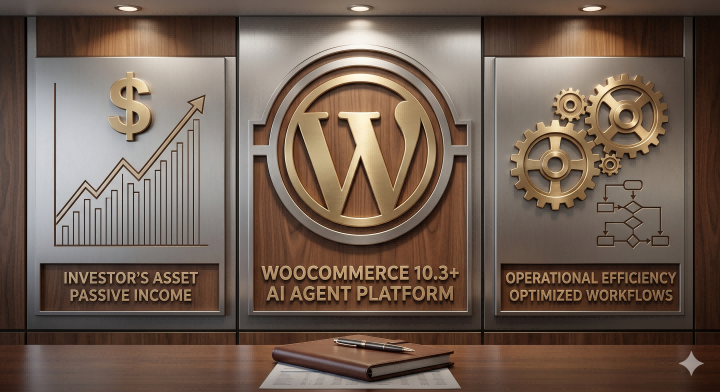
For the entrepreneur over 40, this isn't just a technical upgrade; it's a longevity strategy. * The "Solo-Corp" Era: One person can now manage an enterprise-level store that previously required a team of five. This allows for "Passive Income" that is truly passive.
-
Asset Liquidity: An AI-automated WooCommerce store is a high-yield asset. It is easier to sell (exit) because the "operational intelligence" is baked into the system, not trapped in the heads of expensive employees.
4. Shopify vs. WooCommerce: The Decentralization Dividend
The difference is philosophical.
-
Shopify’s AI is a "Managed Service." You are allowed to use the AI tools they give you, under their terms, within their ecosystem.
-
WooCommerce’s AI is "Agentic Freedom." Because it leverages the WordPress ecosystem of 60,000+ plugins, every single plugin can eventually become an "Ability." Want your AI to handle email marketing via Mailchimp? If there's a plugin with an Ability hook, the AI can use it.
5. The Final Frontier: AI-to-AI Commerce
We are moving toward a world where the "Storefront" is optional. Soon, a customer's personal AI agent will talk directly to your store's MCP server.
"Find me a gift for a gardening enthusiast under $200." Your store’s AI will negotiate, verify stock, and execute the transaction without either human ever seeing a "Checkout" page.
The 2026 "Turnaround" (翻身仗) is here. For those who value control, data sovereignty, and the lowest possible operational friction, the open-source path isn't just an alternative—it's the new gold standard.
🔗 Essential Resources & Links for the Modern Investor
To understand and implement this "Agentic" transition, keep these resources on your radar:
-
The Model Context Protocol (MCP) Official Site: The open standard introduced by Anthropic that allows AI models to connect to data and tools. This is the "bridge" Woo is using.
-
WooCommerce Developer Blog - The 10.3+ Roadmap: Follow the official updates on how the REST API is being converted into AI-ready "Tools."
-
WordPress Abilities API Documentation: (Search for "Abilities" and "Interactivity API") - The technical foundation for how WP 6.9+ communicates with autonomous agents.
-
GitHub: mcp-woocommerce Server: Explore the open-source community's work in creating production-ready MCP servers that expose WooCommerce's 73+ core functions.
-
Anthropic's Guide to MCP Clients: Learn how to use Claude Desktop as your new "Store Manager" without ever logging into a dashboard.
- Details
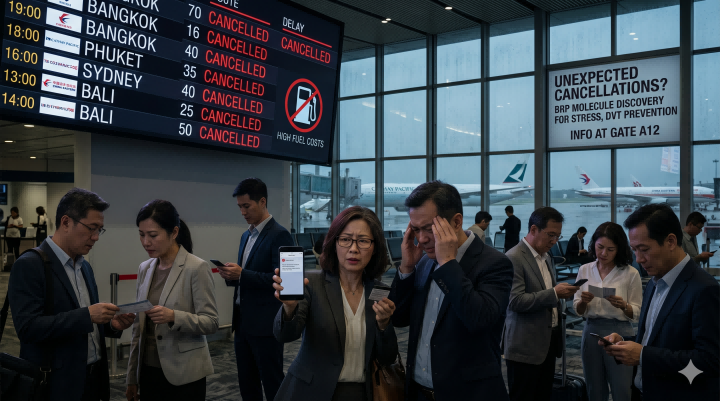
The travel world is facing a major disruption. Due to tensions in the Middle East, the supply of oil is unstable, and fuel prices have doubled. For anyone planning a trip in 2026, here is what you need to know about the current situation.
✈️ Global Flight Cancellations: Real Examples
Airlines are losing money on many routes because fuel is too expensive. To save their businesses, they are canceling hundreds of flights.
-
In Asia: The Civil Aviation Administration of China reports that 50 international flights per week are being cut in May. Specific routes like Xi’an to Phuket, Chongqing to Phuket, and Yantai to Bangkok have seen almost all flights removed from the schedule.
-
In Australia: Qantas and other carriers are reducing flights to and from Europe. Because they must fly around conflict zones, the trips are longer and use much more fuel. For example, flights from Guangzhou to Darwin and Wuhan to Sydney now have a cancellation rate of over 50%.
-
In Europe and the US: Carriers like Lufthansa and United Airlines are reducing the number of flights to Asia. They are also adding high "fuel surcharges." This means even if your flight is not canceled, your ticket may cost 40% more than last year.
🕒 The Impact of Rerouting
To stay safe, planes are avoiding certain airspaces in the Middle East. This is creating a "Long Flight" problem:
-
Extra Time: A flight that used to take 10 hours may now take 14 hours.
-
Higher Stress: Longer flights mean more time in a cramped seat, which increases the risk of fatigue and health issues like leg cramps or blood clots (DVT).
-
Advice: If you are over 40, physical comfort is key. Try to book "Extra Legroom" seats, wear compression socks, and walk in the aisle every two hours to keep your blood flowing.
💰 Protecting Your Travel Plans
In this "High Oil" season, a normal ticket is no longer a guarantee.
-
Check Status Daily: Use airline apps to check your flight status every morning. Cancellations are happening with very short notice.
-
Buy Premium Insurance: Standard travel insurance may not cover "commercial cancellations" caused by fuel prices. Look for "Cancel for Any Reason" (CFAR) insurance to protect your money.
-
Book Directly: It is often easier to get a refund or a new flight if you book directly through the airline rather than a third-party website.
Traveling in May and June of 2026 requires more patience and better planning. By staying informed about route changes and focusing on physical health during longer flights, you can still reach your destination safely.
- Details

https://www.cantonfair.net/tag/89-tea
In 2026, Chinese tea brands are opening thousands of stores across the globe. This is no longer just about "bubble tea." It is a high-speed business battle for global market share. Here is the latest news and data on how these brands are "going global."
1. High-End Growth: The "Elite" Strategy
Top brands like CHAGEE and HEYTEA are focused on expensive cities. They use a "Premium Strategy" to compete with big coffee chains.
-
The News: On April 16, 2026, CHAGEE announced its official entry into Seoul’s Gangnam District. This is their most important move in Asia this year.
-
The Price Gap: In New York and London, a cup of Chinese "Original Leaf" tea now costs between $8 and $12. This is often 20% to 30% more expensive than a standard Starbucks latte.
-
The Success: Since its NASDAQ IPO in 2025, CHAGEE has grown to over 7,300 stores globally. Investors are watching closely as the brand tries to become the "Global King of Tea."
2. The Numbers: A Massive Global Footprint
The scale of this expansion is record-breaking. Chinese tea chains are moving faster than any other food and beverage category.
-
10,000+ Stores: As of early 2026, the total number of Chinese new-style tea stores outside of China has surpassed 12,000.
-
Southeast Asia King: Mixue Ice Cream & Tea is the leader in volume. They now have over 15,000 international locations. In Indonesia alone, Mixue opens an average of 3 new stores every day.
-
Market Value: The "Global Tea Chain" market is now valued at over $74 billion. Analysts predict it will grow by 15% annually through 2030.
3. Localization: Changing for the World
To win in 2026, these brands are not just copying what they do in China. They are changing their stores to fit local needs.
-
The "Sugar Tax" Move: In Europe and Singapore, brands have introduced "Nutri-Grade" labels. By offering 0-sugar and 0-fat options, they are attracting older, health-conscious customers (40+) who usually avoid sweet drinks.
-
Automation: Because labor is expensive in the US and Europe, Chinese brands are exporting automated brewing machines. These machines can make a perfect cup of tea in less than 30 seconds, reducing the need for large staff.
Comparison of the "Global Giants" (2026 Data)
| Brand | Global Stores (Est.) | Target Market | Key Strategy |
| Mixue | 15,000+ | Southeast Asia / Low-cost | Extreme scale and $1 prices. |
| CHAGEE | 7,300+ | Global / High-end | Premium "Original Leaf" & Health. |
| HEYTEA | 4,500+ | Global / Fashion | Pop-up stores and "Cool" branding. |
Summary for Investors
The "Tea Shop War" has moved from China to the world. For investors, the story is about Standardization. The brands that can make a cup of tea taste exactly the same in London and Bangkok—while keeping costs low through technology—are the ones winning the stock market in 2026.
- Details
https://www.cantonfair.net/c/54-furniture-industry
Today, many people feel that their houses are becoming cold and strange. The current trend is: budget hotel-style bedrooms and cafe-style living rooms. While these designs look clean and "fancy," they are making middle-aged people lose the true feeling of home.
The Problem with "Professional" Styles
A home should be a private place full of warmth and memories. However, modern design often copies commercial spaces:
-
The Hotel Bedroom: These rooms are very tidy but have no soul. They are designed to look like no one lives there. For a middle-aged person, a bedroom should hold personal items and history. In a "hotel-style" room, you feel like a guest who is just staying for one night.
-
The Cafe Living Room: These rooms are built for "looking good" on social media. They use hard chairs and big wooden tables. They are good for working or quick chats, but they are not good for resting. You cannot truly relax or "sink into" a cafe-style sofa.
Is Your Home Too Bright?
One of the biggest issues with this new style is the lighting. Modern homes are often too bright, and this is bad for your health.
-
It ruins your sleep: Many modern homes use strong white lights. This light tells your brain it is still daytime. It stops your body from resting and makes it very hard to fall asleep at night.
-
It causes stress: Very bright light makes us feel alert and "on duty." A home should be a place to hide from the world. If the lights are too strong, your mind and body can never truly calm down.
How to Find the "Home Feeling" Again
We should remember that a home is a place to live, not a place to show off. To make your house feel like a home again, you can try these simple steps:
-
Change the lights: Use warm yellow bulbs instead of cold white ones. Use small lamps instead of big ceiling lights.
-
Add personal items: Don't be afraid of a little "mess." Put out your old books, family photos, and things that make you happy.
-
Choose comfort over style: A home should have soft chairs and warm blankets. It should be a place where you can be yourself.
Conclusion A real home doesn't need to look like a magazine. It should be a warm, quiet, and slightly dark place where you can finally relax after a long day. Don't let "trends" take away your peace.
- Details
1. The "Cheap Stuff" Trap
Most people think they can get rich by making "things." But if a robot can 3D-print a house or weave a shirt for pennies, the price of "things" will drop to zero. The Warning: If you build a business based on "manufacturing" or "simple services," you are fighting a losing battle against machines that don't sleep and don't get paid. You cannot compete with "free."
2. The New Gold: Energy, Atoms, and Land
When the "work" is free, the only things that cost money are the ingredients. To get rich in the future, you must own the physical world:
-
Energy: Robots and AI eat electricity like monsters. The people who own the sun, the wind, and the fusion of the future will be the new oil tycoons.
-
Raw Materials: You can’t 3D-print something out of thin air. Lithium, copper, and rare earth metals are the "bricks" of the future.
-
Space: You can digitize a brain, but you cannot digitize a backyard. Real, physical land will be the ultimate status symbol.
My Honest Worries: The Dark Side of Wealth
I am worried that the hunger for "wealth" will turn into a war for the Earth. In the past, we traded ideas. In the future, if we aren't careful, we will only fight over mines and soil. My fear is that the "rich" of the future will be those who hoard the planet’s resources while everyone else lives in a "free" but plastic, digital cage. Getting rich shouldn't mean leaving the planet poor.
My Bold Expectations: How to Win "Right"
1. From "Consumer" to "Owner of the Loop"
I expect the next generation of wealthy leaders to be resource masters. Don't just own a mine; own the technology that recycles every atom back into the system. The real money won't be in taking from the Earth, but in creating a "closed loop" where nothing is wasted.
2. Investing in the "Un-Robotable"
I expect that as machines become perfect, "imperfection" will become expensive. If you want to build a luxury brand, don't use a robot. Use a human hand, real wood, and real time. The "Human Touch" will be the most expensive ingredient in the world.
The Bottom Line
If you want to be rich, stop chasing the software. Start looking at the Energy that powers it, the Materials that build it, and the Land it stands on.
My Hope: That you use this wealth not just to buy a bigger house, but to protect the only resources that machines can never replace: our air, our water, and our nature.
- Details
- My Biggest Worries: A World Pulled Apart
- Tribology: The Science of Moving Surfaces
- 2026 Global Alcohol Industry Report: Evolution and Digital Transformation
- The Next Big Thing: Why Anti-Aging Will Beat Weight-Loss Drugs
- The Magic of the "Middleman": Why Wholesalers Matter in a Supply Chain
- Will AI Kill My Factory? How to Turn Anxiety into Your Secret Weapon
- The Future of Work: Why "Physical Skills" Are the New Gold
- The Silver Tsunami’s Golden Opportunity: The Rise of AI-Powered Eldertech